Difference between revisions of "AY Honors/Flower Culture/Answer Key/uk"
(Created page with "<noinclude>") |
(Created page with "</noinclude> <!-- 7. Ухаживайте за 2мя или более видами многолетних цветов, растущих на улице в течение о...") |
||
| Line 100: | Line 100: | ||
{{ansreq|page={{#titleparts:{{PAGENAME}}|2|1}}|num=7}} | {{ansreq|page={{#titleparts:{{PAGENAME}}|2|1}}|num=7}} | ||
| − | <noinclude> | + | <noinclude></noinclude> |
| − | </noinclude> | + | <!-- 7. Ухаживайте за 2мя или более видами многолетних цветов, растущих на улице в течение одного сезона(вносите удобрения, поливайте, делайте прополку и уничтожайте вредителей, если это нужно). Ведите письменные еженедельные записи, включающие в себя и перечисление того, что было сделано. --> |
| − | <!-- 7. | ||
| − | |||
| − | |||
<div lang="en" dir="ltr" class="mw-content-ltr"> | <div lang="en" dir="ltr" class="mw-content-ltr"> | ||
Revision as of 16:55, 24 March 2025
Уровень сложности
1
Рік
1938
Version
18.07.2026
Орган затвердження
Генеральної Конференції

1
1a
1b
1c
2
3
4
5
6
7
Visit your perennials weekly, and for this requirement, jot down what you do. You can write it in a notebook, or even start a blog to record your activities.
8
The three most important plant nutrients are nitrogen, phosphorus, and potassium. NPK fertilizers are named for the chemical symbols of these elements: N for nitrogen, P for phosphorus, and K for potassium. Fertilizers are marked with the percentage of each of these nutrients. For example, a fertilizer may be marked as 18-51-20, which means it is 18% Nitrogen, 51% Phosphorus, and 20% Potassium. You may notice that these numbers do not add to 100% - the remainder is made up of "fillers". Fillers prevent the nutrients from clumping together and "burning" the plant.
9
9a
- Begonia Orange Sherbet 2.jpg
Begonia
- Wild Columbine 2.jpg
Columbine
- Helleborus foetidus2.jpg
Hellebore
- Hosta Abiqua Blue Crinkles 1.jpg
Hosta
- Chimaphila2.jpg
Pipsissewa
- Trailing arbutus 2006.jpg
Trailing arbutus
- Blue violet.jpg
Violet
- Gaultheria-procumbens-habit.JPG
Wintergreen
9b
- Dusty Miller
- Gazania
- Sweet Alyssum
- Globe amaranth
- Verbena
- Nasturtium
9c
- Sunflower
- Sweet Alyssum
- Cosmos
- Dahlia
- Petunia
- Geranium
- Gazania
- Snapdragon
- Verbena
- Zinnia
9d
- Dahlia
- Marigold
- Lobelia
- Cup flower
- Impatiens
- Pansy
10
The purpose of a soil test is to determine the nutrient content of the soil. This will allow the gardener to select plants that will grow best in the existing soil conditions or to determine what nutrient supplements are required to amend the soil for the intended plants.
11
Annuals

Begonia

Canterbury bells

Cosmos

Geranium

Impatiens (Busy Lizzie)
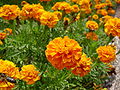
Marigold

Nasturtium

Periwinkle

Petunia

Salvia
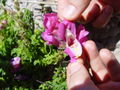
Snapdragon

Zinnia


Biennial

Evening primroses

Foxglove

Forget-me-not

Hollyhock

Pansy
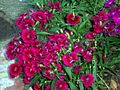
Sweet William
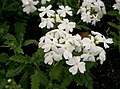
Verbena


Perennials

Cardinal flower
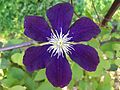
Clematis

Columbine

Daylily
Foxglove

Hellebore
- Hosta Abiqua Blue Crinkles 1.jpg
Hosta

Hydrangea

Iris

Lavender

Peony

Rose

Tulip


_v2.jpg)


References
- http://mostlyorganicgarden.com/NPK_explanation.html
- Wikipedia articles: